
How to Write a Portfolio Case Study Without Inventing Results
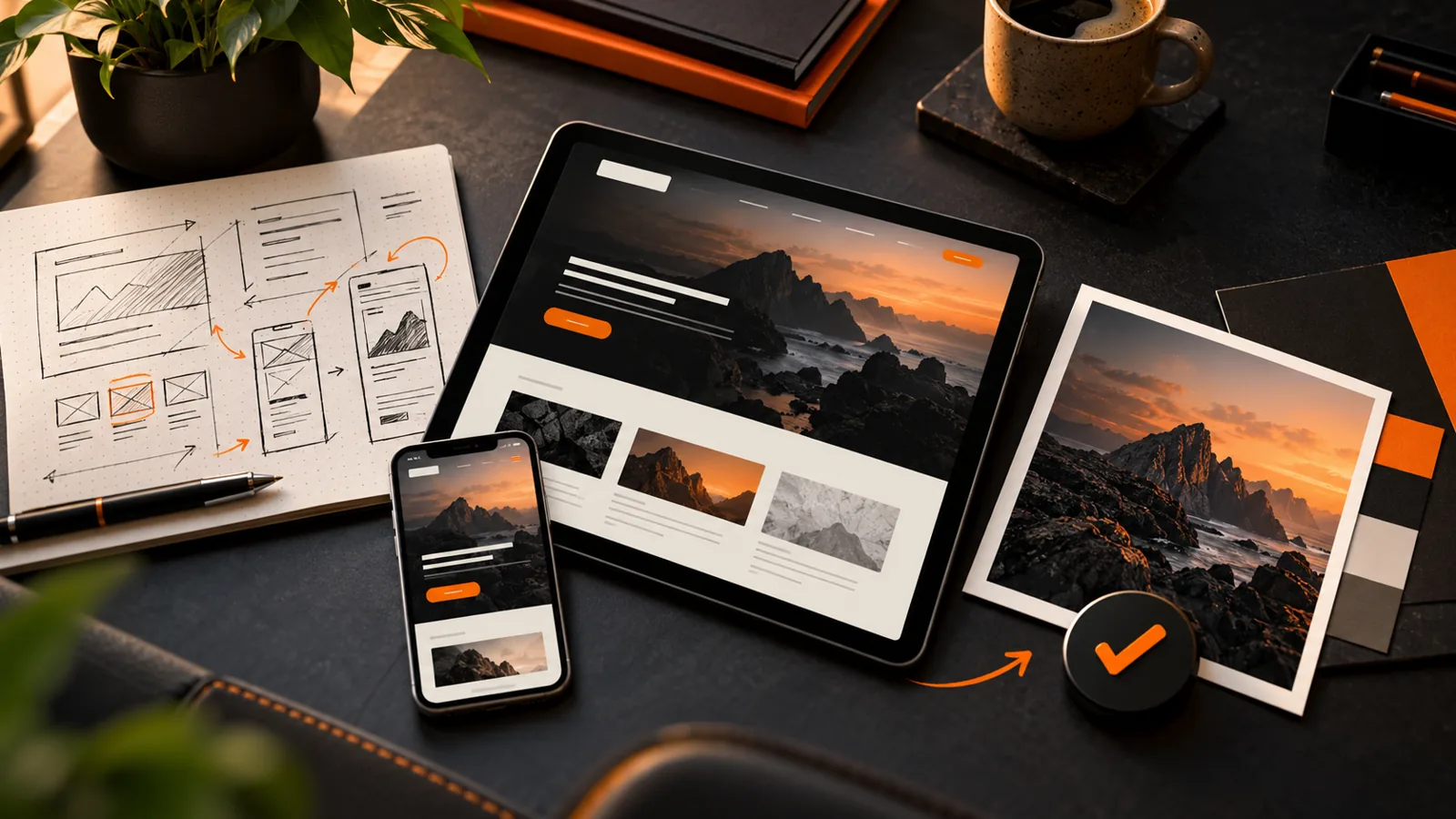
To write a portfolio case study, explain the project context, your role, the choices you made and the work you delivered. Support the explanation with approved examples. If you do not have verified performance results, describe observable outputs and be clear about what you cannot claim.
A case study helps a potential client assess how you think and whether your experience fits their project. It is different from a gallery caption or a list of services. This guide gives you a practical structure without requiring invented revenue, rankings or conversion figures.
Choose a project that supports the work you want to win
You do not need to turn every portfolio item into a long case study. Choose a project where you can explain meaningful decisions, show relevant work and describe your actual contribution. A smaller project with a clear story may be more useful than an impressive image with no context.
Ask whether the project is relevant to the kind of enquiry you want. For example, a photographer seeking bookings may want to see how you organized a gallery and enquiry route. A client commissioning a brand identity may care more about the brief, visual decisions and deliverables.
Confirm what you are allowed to publish
Before writing, check permission to show the project, name the client, use screenshots and discuss details. A public website does not automatically give you permission to share private briefs, analytics, internal feedback or unpublished work.
- Check any contract or confidentiality restrictions.
- Ask the appropriate owner to approve public examples.
- Remove private contact details and personal information from screenshots.
- Credit collaborators accurately.
- Use testimonials only with permission and genuine wording.
If you cannot show the work, choose another project or get an approved alternative. Do not assume that obscuring a client name or changing a number makes confidential information safe to publish.
Start with a short project summary
The opening should help a visitor understand the project quickly. Include the type of client or project, the original need, your role and the delivered scope. Use a plain sentence before introducing detailed process.
An illustrative opening
“This concept project explores a portfolio website for an independent photographer. The brief was to organize three collections and provide a clear enquiry route. My role covered page structure, visual design and a clickable prototype.”
This is a fictional example of wording, not a Nerdzilla Tech client project. A real case study should replace every detail with confirmed information. If the work was a concept, student project or unfinished prototype, label it clearly.
Explain the problem without overstating it
Describe the starting situation in terms you can support. “The original page combined several project types without labels” is an observable statement. “The website was losing thousands in sales” requires evidence you may not have.
Separate the client’s goal from the result. “The client wanted more booking enquiries” describes a brief. It does not prove enquiries increased after launch. This distinction keeps the case study useful and credible.
Describe constraints that influenced the work
Relevant constraints can explain your decisions: an existing platform, a limited asset library, a fixed page structure, a handover requirement or a defined launch scope. Do not expose private budget or business information without approval.
State your role and what others did
Potential clients need to know which parts you can repeat for them. List your actual contribution and name other contributors where appropriate. Do not present a team project as if you completed everything yourself.
For a website project, distinguish research, copy, design, development, content entry and maintenance. If you designed the interface but another person built it, say so. If the client supplied photographs and copy, credit that input rather than implying it was part of your service.
Show decisions, not just a sequence of tools
A long list of software does not explain your judgement. Select the decisions that mattered to the brief and connect each one to a need or constraint.
Use a need, choice and evidence pattern
Need: Visitors had to find the relevant type of work quickly. Choice: The proposed layout grouped projects into clearly named collections. Evidence: An approved screenshot shows the collection navigation and project cards.
This pattern explains a design choice without claiming a measured improvement. Where testing or feedback exists, describe what was actually tested, who participated and what changed. Do not invent research sessions to make the process sound more complete.
Keep the process proportionate
You do not need to document every wireframe. Show enough to explain a meaningful change. A short annotated comparison can be more useful than ten unexplained screenshots. For a finished visual design, explain what the image demonstrates rather than relying on “modern” or “user-friendly.”
Choose visuals that make the story easier to assess
Use an overview of the finished work and a small number of relevant details. Before-and-after images can help when both are approved and comparable. Label concepts, prototypes and live screenshots accurately.
- Use readable crops rather than a full-page screenshot reduced beyond recognition.
- Add captions explaining the decision shown.
- Check mobile crops and image loading.
- Write alt text describing the actual visual.
- Do not add confidential dashboard screenshots as decorative proof.
If your portfolio images are heavy or look soft, our guide to presenting a photography portfolio can help you think about gallery choices. The same need for intentional presentation applies to many visual projects.
Report results only when you can verify them
Results may include a launched website, approved deliverables, a completed handover or a documented test outcome. Those are different from business performance figures. Identify which kind of evidence you have.
If you have measured results
State the source, period, baseline and limits. A traffic change does not automatically prove the design caused it. If a metric depends on paid promotion, seasonality or other changes, avoid attributing it entirely to your work. Obtain permission before publishing the data.
If you do not have measured results
Say what was delivered and verified. For example: “The final prototype includes collection pages and an enquiry flow. It was not launched, so no live enquiry data is available.” Honest limits are more useful than fabricated percentages.
You can also describe a lesson or an unresolved trade-off. Keep it specific: what would you test next, and why? Do not turn a planned future measurement into a completed outcome.
A portfolio case study template
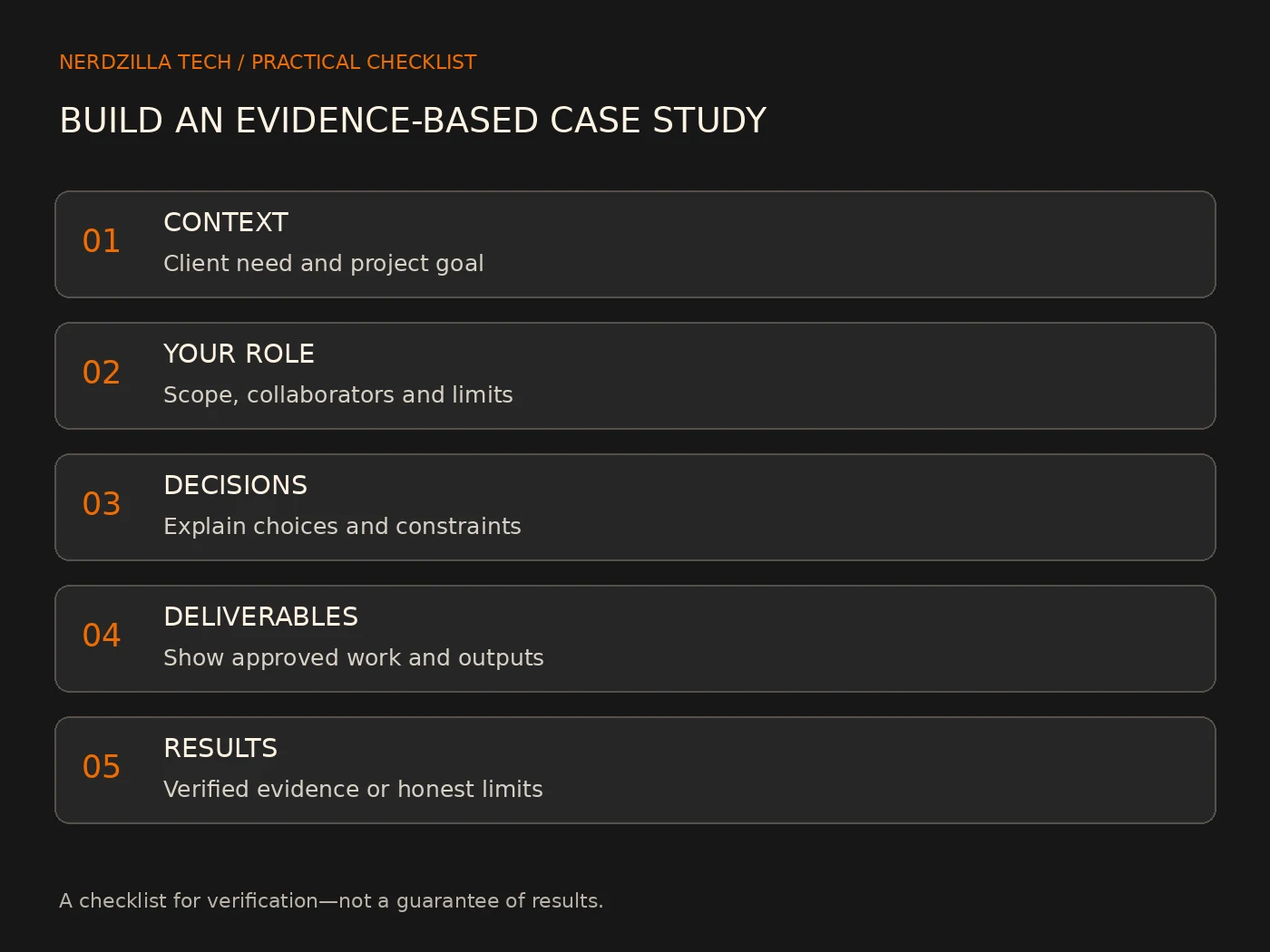
Use this as a writing outline, then remove any part that does not fit the real project:
- Project summary: What was the project, who was it for and what did you deliver?
- Context and goal: What need did the brief describe?
- Your role: Which tasks did you complete, and who else contributed?
- Constraints: What shaped the scope and choices?
- Key decisions: Explain two or three choices with approved visuals.
- Deliverables: Show the final work and its status.
- Evidence and limits: Include verified results or state what was not measured.
- Next step: Link to relevant work or a clear enquiry route.
Write the summary last if that helps. Once the detail is accurate, the opening becomes easier to condense.
Connect the case study to a relevant enquiry
The CTA should follow naturally from the work shown. “Discuss a portfolio website” is clearer than an unrelated sales pitch. Link to the service that matches the project and make it easy to contact you.
Keep the commercial service page and case study distinct. The service page explains what someone can hire you to do. The case study explains a particular project and provides evidence. Avoid copying the same service description into every project.
Frequently asked questions
How long should a portfolio case study be?
Long enough to explain the important decisions and evidence without repeating yourself. A focused project may need only a concise account; a complex one may require more detail. Use useful headings and visuals rather than targeting a word count.
Can I include a concept project?
Yes, if you clearly label it and do not imply it was commissioned, launched or produced client results. Explain the brief you set and the work you completed.
Do I need before-and-after images?
No. Use them when they are permitted and help explain the change. A new project or confidential starting point may be better served by approved process and final-work images.
What if I cannot name the client?
Check what you are actually permitted to share. Use an approved description or another project. Do not publish confidential details simply because the name has been removed.
Make the project understandable before making it impressive
A strong case study is clear about the need, contribution, decisions and evidence. Select a relevant project, use approved visuals and make the limits explicit. That gives prospective clients something concrete to assess.
To discuss how your work can be presented on a website, explore our portfolio website design service, browse our selected website projects or discuss your portfolio website.